 As the most important occasion in Vietnamese culture, the Lunar New Year (Tet) brings all the traditional beauty despite many years of experience.
For the people of Vietnam, Tet is not only a chance for family gathering but also a time to preserve the national identity through the maintenance of traditional customs. Depending on each region, or according to the concept of religion of the Vietnamese, the customs in each locality are usually slightly different.
But in general, the common point of the New Year customs is divided into three periods: Before New Year’s Eve, New Year’s Eve and New Year. Each period corresponds to the preparation, the ritual or the different forms of expression.
1 – The farewell ceremony for the Kitchen Gods (Ong Tao)
 On December 23, Vietnamese families will clean up the kitchen to offer Ong Tao a farewell ceremony. Traditional offerings must have goldfishes to send him to The Heaven Place , hoping he will report to the Jade Emperor the good because according to folklore this is the day the Jade Emperor will charge or reward the owner based on what Ong Tao report.
2 – Cleaning the house
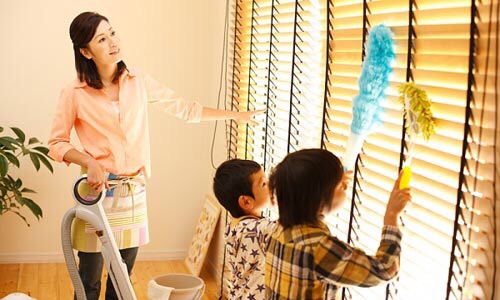 Cleaning on New Year means to prepare “off the old year, welcome the new year.” On this day, all the furniture in the house will be cleaned and refreshed, the new dinnerware set will be prepared for the; things all around the house will be decorated to look newer.
In addition, it is time to look back at the debt that must be paid, if you have enough, it must be paid before Tet, should not let it be over the new year.
3 – Going to the markets
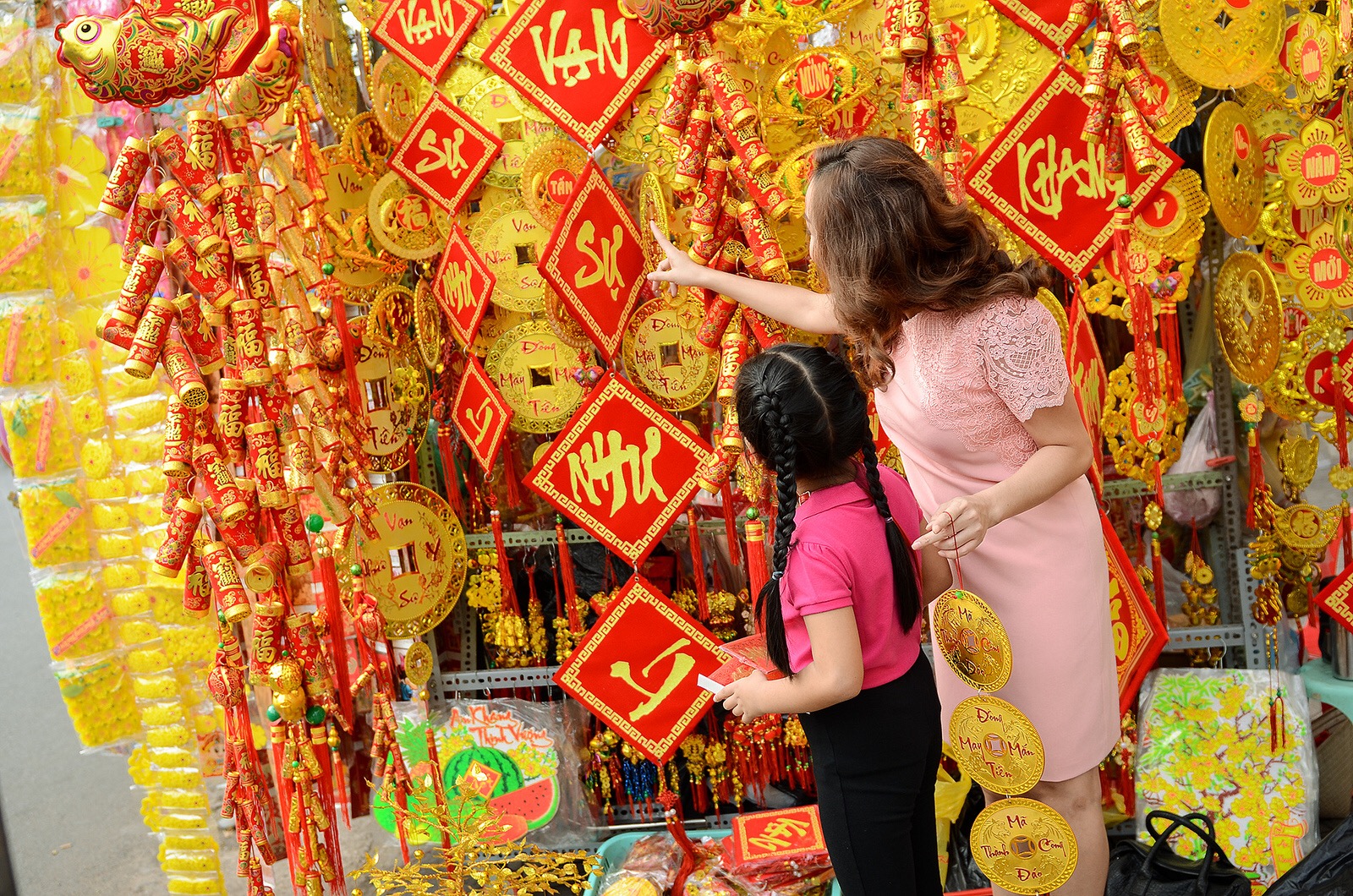 The old people go to the market mainly to buy dong leaves, buy meat, buy onion to make stuffed sticky rice cake (Banh Chung). Vietnamese people also have fun arranging flowers and decorating for the five fruits tray on Tet.
The flowers that are indispensable for the Tet festival are peach blossom, apricot blossom,gladiolus, peony, camellia, dahlia, etc. Fruit tray is dependent on the region where there are different fruits. All of them carry the meaning: all wishes come true, healthy, wealthy, full of happiness, …
4 – Calligraphy
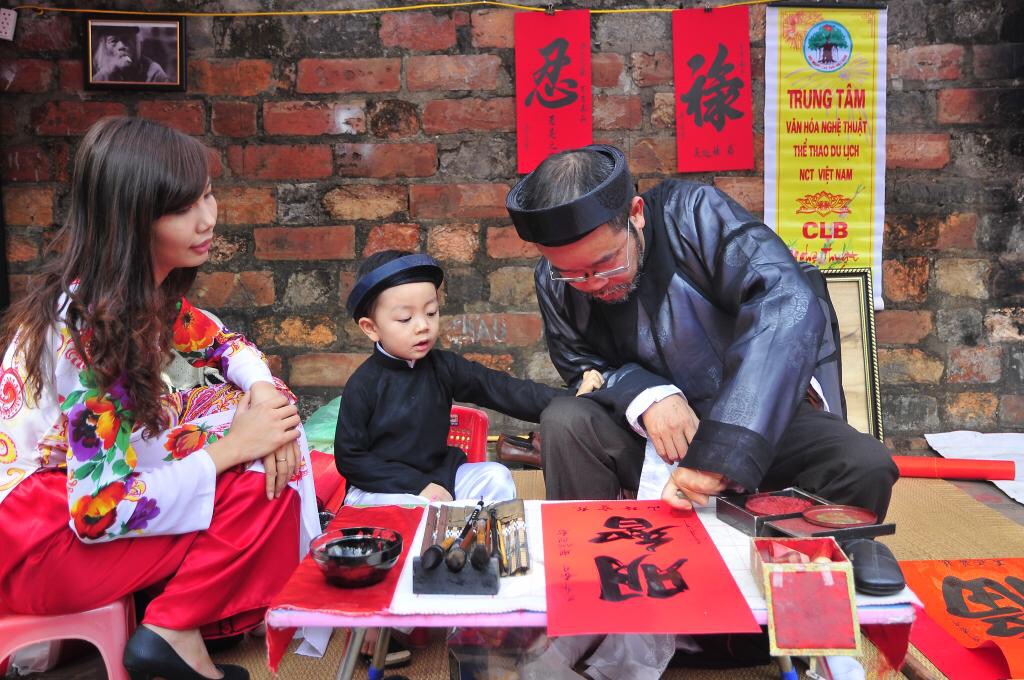 When they go to Tet market, they also do not forget to go ask for a calligraphy picture, which can be a parallel sentence or a single word. The ancient people often ask for a only word to worship with the desire of children to learn the word and becomes a better person. The most favorite words are Tam, Phuc, Duc, An, Loc, …
5 – Visiting ancestral graves
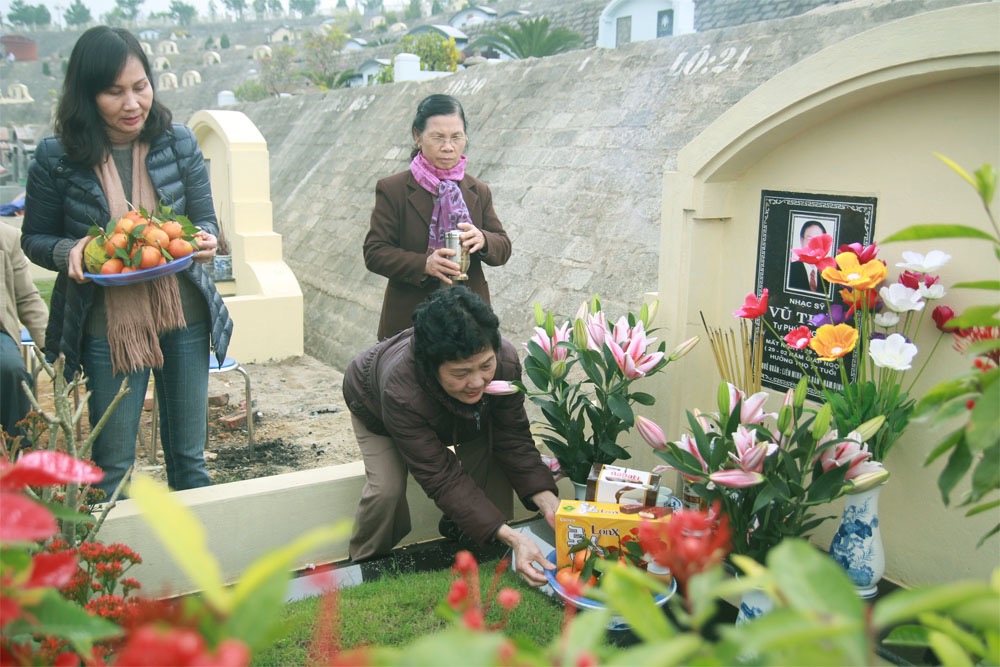 Before the Lunar New Year, the descendants of the clan will make amends, together they visit and sweep the ancestral graves. Each family brought flowers,candles, fruits to worship, invited their ancestors to celebrate Tet with their descendants and to review the memories of the old year, wish the good things for the new year to come.
6 – Banh Chung, banh Tet
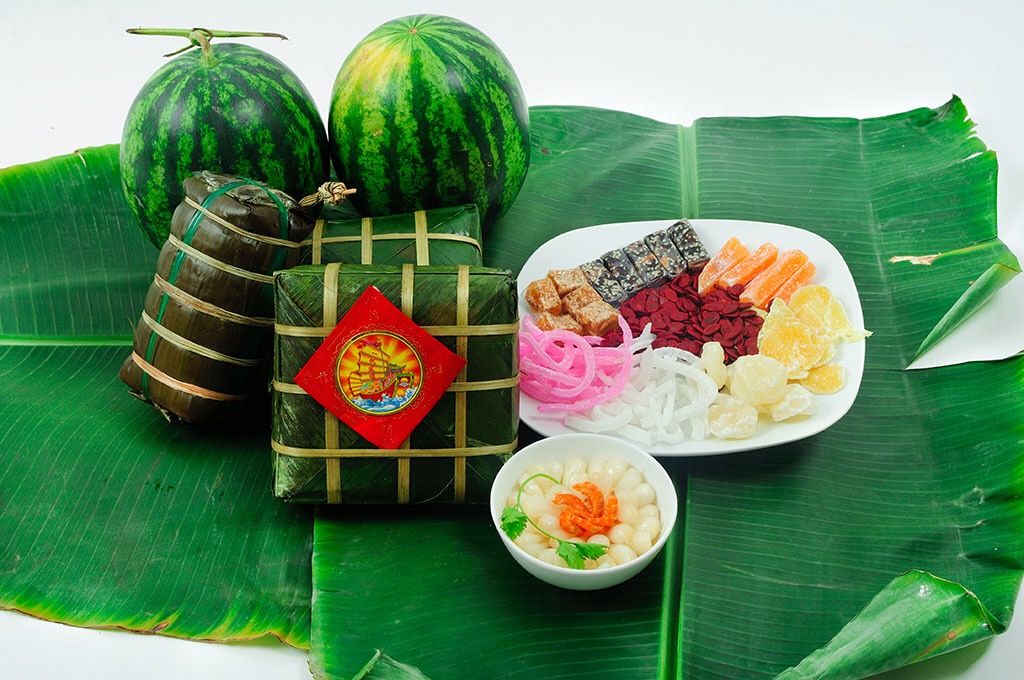 Banh Chung is a custom from glutinous rice culture of King Hung Vuong 18th. Nowadays, at 28th-29th of Tet, Vietnamese families often gather to make Banh Chung(square glutinous rice cake) and Banh Tet to enjoy or giveaway on Tet. Must be very skilled hands to be able to wrap the cake beautifully and tightly, otherwise the cake will crack and absorb water, make the quality of the cake go down.
7 – New Year’s Eve
 New Year’s Eve must consist of two feasts, one in the house and one in the open air. Vietnamese people celebrate the New Year’s Eve ceremony because of the belief that: A year begins, must have ended. The meaning of the ceremony is also: to remove all the old regrets, welcome the new year to the fortune and the good.
8 – Going to temple in the beginning of the year
 Going to the temple in the beginning of the year is not just for a simple wish, but it is also a time for people to return to the spiritual place after the hard work year to seek peace, to dismiss the troubles, worry of the old year.
9 – The aura of the earth (a Xong Dat)
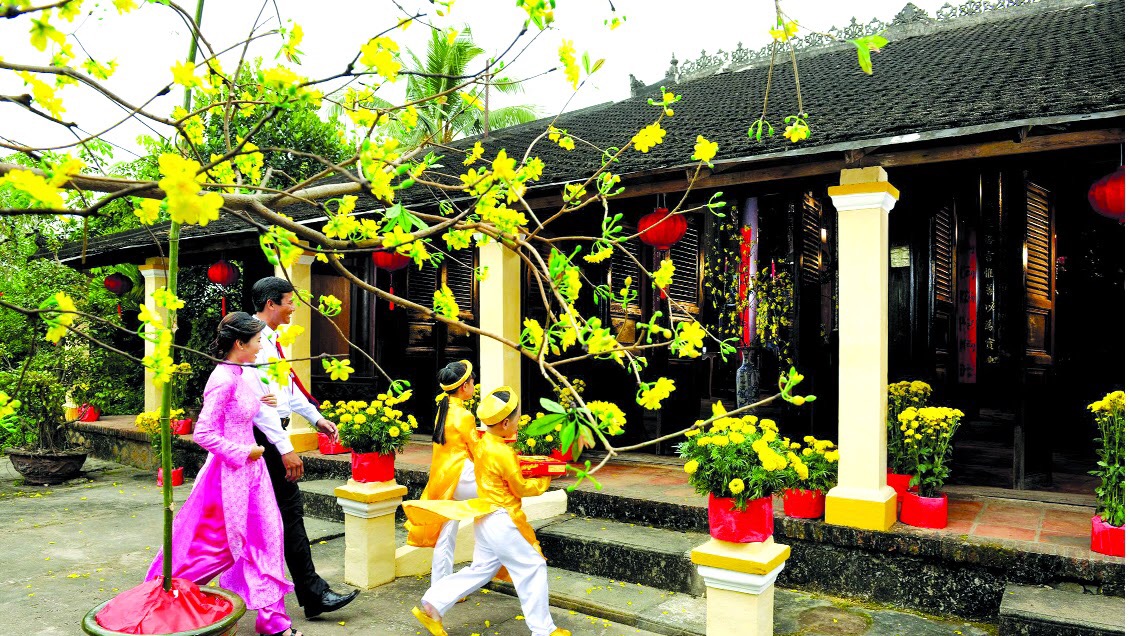 Giao Thua is the most sacred time of the year. Therefore, the first houseguest to offer the first greeting is very important. If that particular guest has a good aura (well respected, well educated, successful, famous, etc.), then the family believes that they will receive luck and good fortune throughout the year. The belief of “Xong Dat” still remains nowadays, especially among families with businesses.
10 – Exchanging New Year’s wishes
 It can be said,new year’s wishes is a very unique and indispensable culture in Tet. When they go to New Year’s Day, everyone is dressed in nice clothes, usually with a red color, and bring gifts to give to whoever they visit.
Vietnamese New Year’s culture also includes the sentence “Father’s Day is the first, Mother’s Day is the second, Teacher’s Day is the third”. In that sentence the father represents the farther’s side, the mother is the mother’s side, the teacher represents the people who help us understand.
11 – Giving away the red envelopes
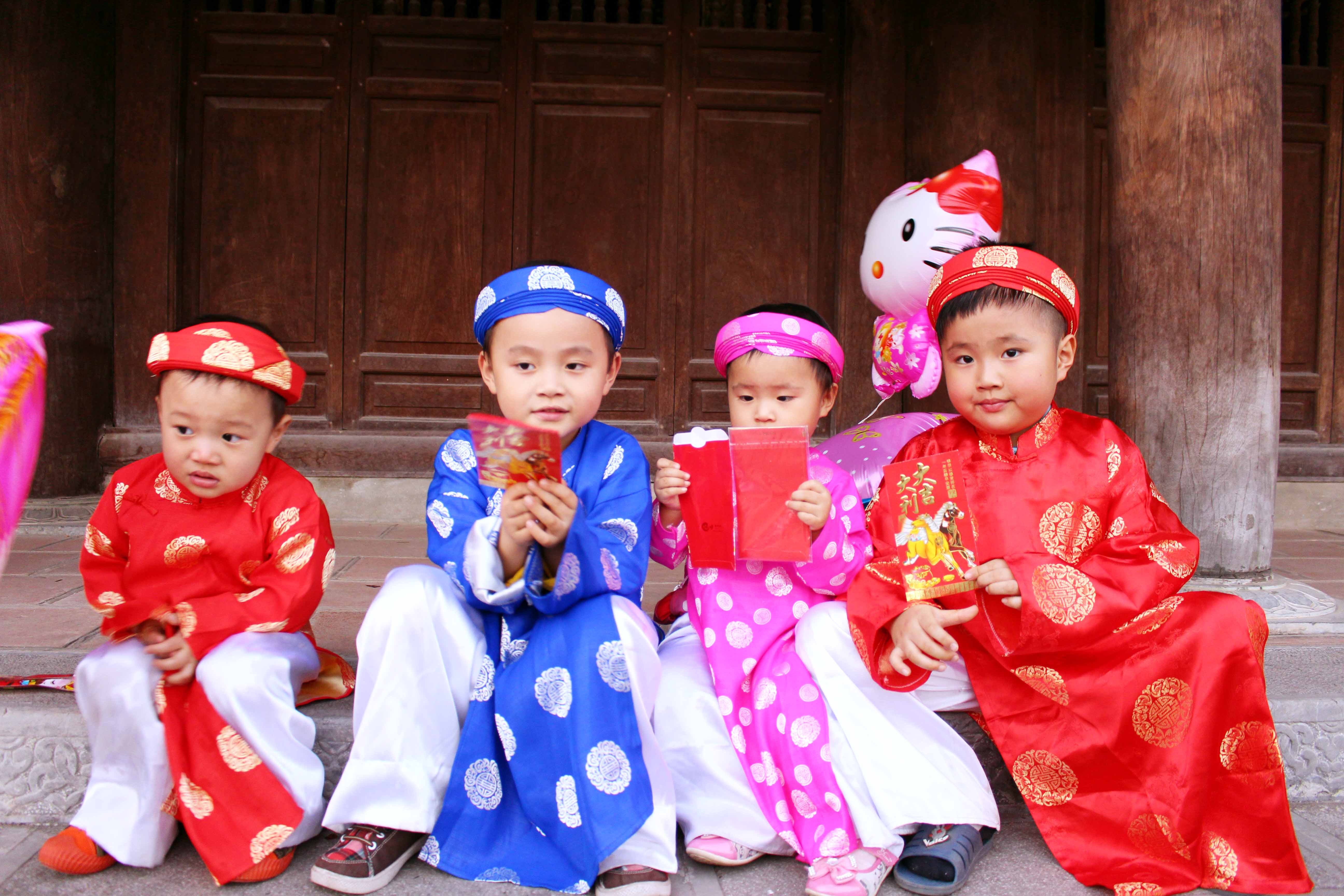 New Year’s Day, Vietnamese people have the habit of littering children with the wish they are happy, heathy and well-educated. Red envelopes also symbolizes luck, good fortune. In some cultures, anyone who is not married will still be considered a child and allowed to receive a lucky envelope.
Over the New Year, the customs of the New Year is not just the form, they enhance the beauty of the soul, the beauty of the cultural of the Vietnamese people.
Although going far, but on this day, people are trying to return home union gathering with their families. No matter how many years have passed, the Vietnamese people still do not forget the source, every day contribute to the construction and maintenance of beautiful traditional culture.
 HyggeStudio99
Leave a comment